Expansion Joint Tapes — TPE & EPDM Sealing Membranes
Dseal TPE and EPDM expansion joint tapes for sealing high-movement gaps across surfaces and substrates — with the joint filler boards, backer rods and bonding adhesives that complete the detail. For bridge decks, basements, roofs, STPs and tunnels.
When Sealant Alone Can’t Hold The Gap.
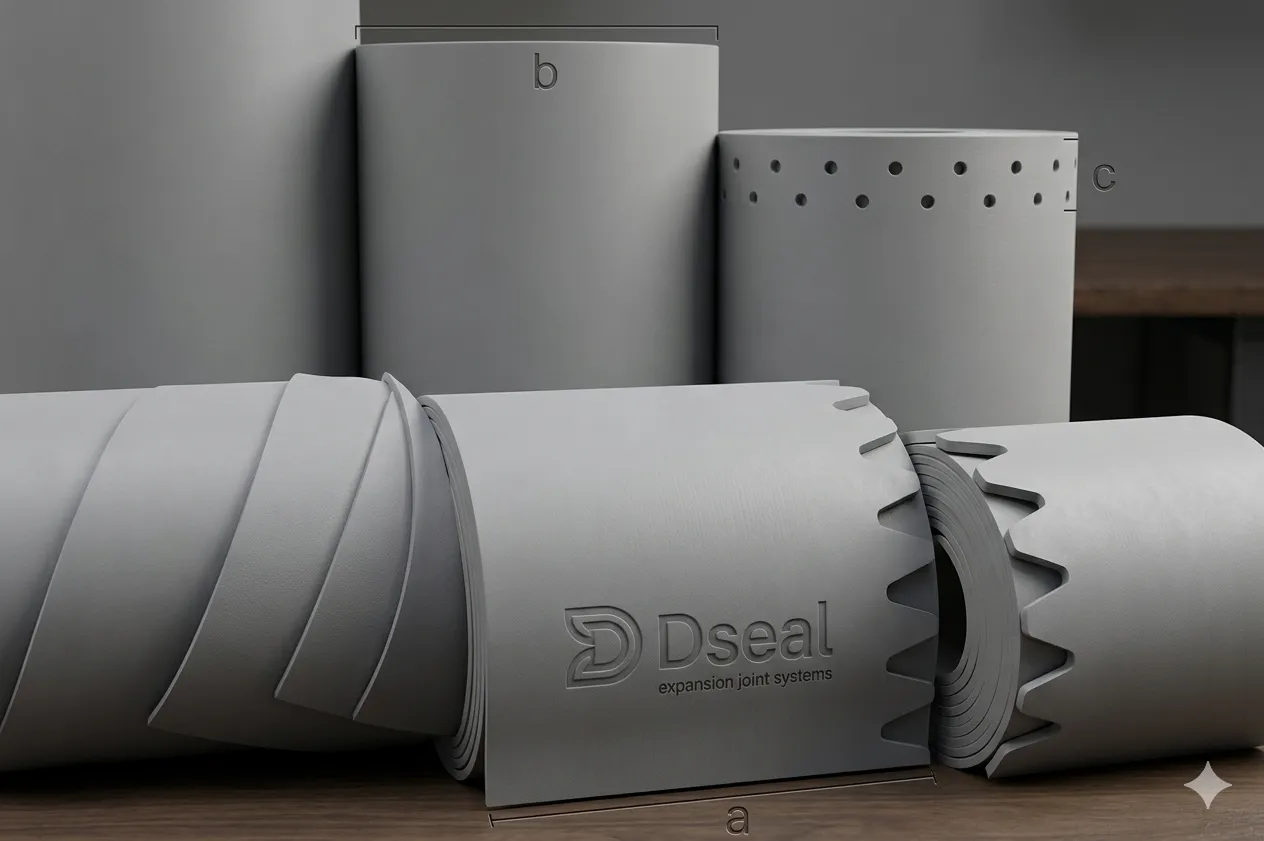
Expansion joint tape bridges a moving gap with a bonded elastomeric band — water-tight, puncture-resistant and continuous across plane changes, direction shifts and corners.
Where a gunned sealant would be stretched past its movement class, a tape absorbs the movement in its own elongation instead of at the bond line. Dseal tapes deliver water tightness in challenging conditions, superior puncture resistance compared with traditional membrane-based joints, and easy installation that keeps the programme moving. They also tie the joint into the deck waterproofing — the detail most joints leak through first.
TPE Or EPDM — Choose By Exposure.
Both are proven expansion joint membranes. The right one depends on chemistry, climate and budget.
| Property | TPE membranes | EPDM membranes |
|---|---|---|
| Flexibility | Excellent | Good |
| Chemical resistance | High | Moderate |
| UV resistance | Excellent | Excellent |
| Cold weather performance | Moderate | Excellent |
| Recyclability | Excellent | Good |
| Lifespan | 25+ years | 50+ years |
| Cost | Higher | Lower |
| Installation | Hot air welding, adhesives | Adhesives, ballasting |
In short: TPE where chemical resistance, flexibility and hot-air weldability matter — industrial structures and wastewater plants; EPDM where extreme climate durability and the longest lifespan win — exposed bridge joints and roofs. Both are used extensively in expansion joint sealing across buildings, bridges and industrial structures.
Tapes, Boards & The Bits Between.
Dseal expansion joint tapes — 75 mm to 250 mm
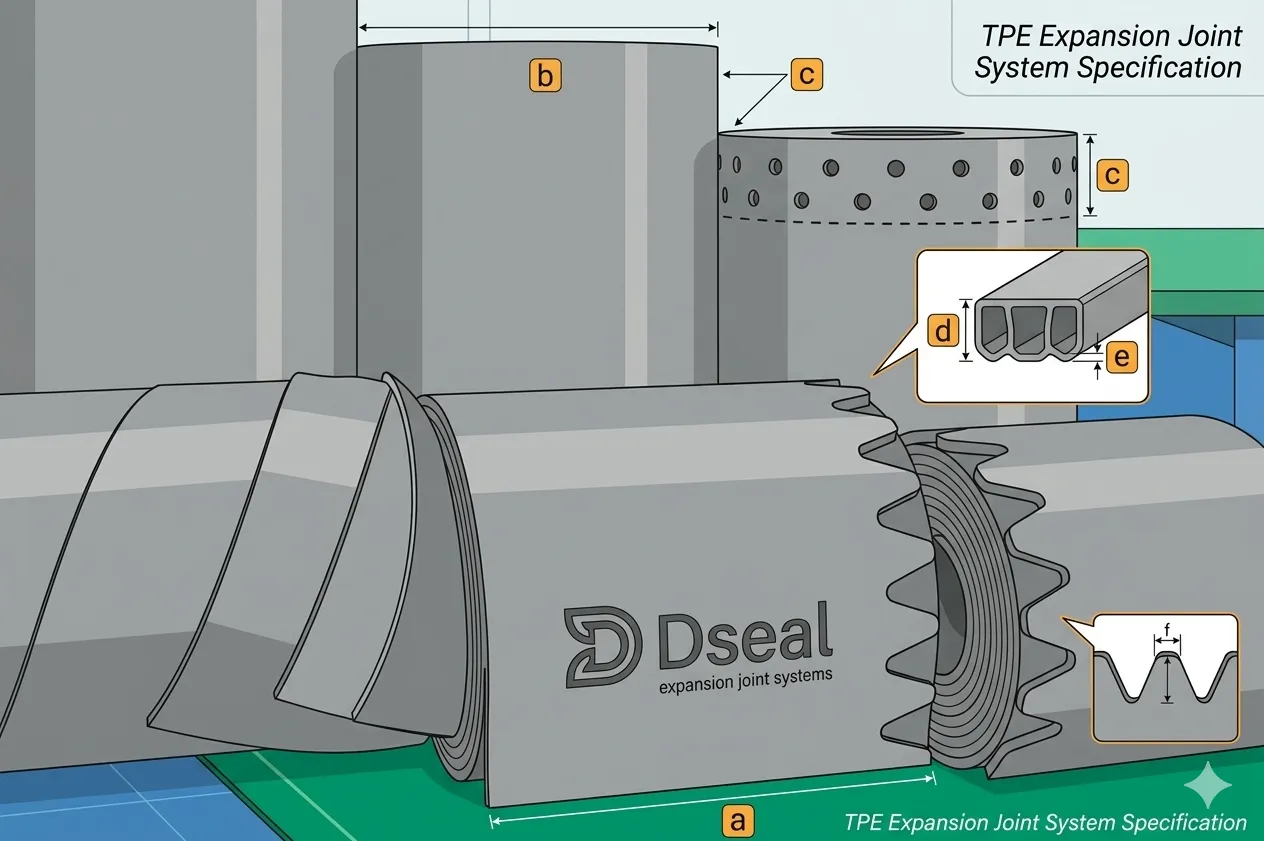
Preformed profiles sized to the gap: GS TPE EJ 75 Eagle covers 75 mm gaps and anchors to TPO membranes and mother slabs; GS TPE EJ 250 Ohm covers 250 mm gaps with the same chemical, acid, base, corrosion, UV and weathering resistance. GS EJ flexible waterproofing tapes handle crack bridging and joint work between those widths, and corner tapes give seamless transitions at edges and intersections.
Joint filler boards
The compressible board forms and maintains the gap before the tape or sealant goes on. DURAboard HD100 is a crosslinked, pre-moulded PU-based filler board with 650% elongation before breaking, a −50°C to +70°C working range, low load transfer, and resistance to UV, weathering and root penetration — heat-weldable and lightweight. Bitumen-impregnated fibre boards (Sika Joint Filler) offer the economical route: recovery to more than 70% of original dimension after compression, thicknesses of 10, 12, 20 and 25 mm in sheets of about 1.20 × 2.10 m. Resin- or bitumen-impregnated glass fibre and mineral wool boards cover bridges, buildings and pavements where on-site cutting matters.
Adhesives & companions
Tapes are bonded with epoxy adhesive — we stock MC-DUR 1280, the special adhesive for expansion joints — with acrylic, silicone and PU adhesives for self-adhering and specialty tapes. Complete the joint with backer rods below sealant-finished sections and a compatible sealant at terminations.
The Bond Line Is The Product.
A tape is only as good as its adhesion, so the method is fixed:
- Clean the substrate — dust, oil and loose particles off; dry surface; prime porous substrates
- Measure and cut the tape with overlap for seamless coverage
- Apply the epoxy adhesive evenly along both joint shoulders
- Set the tape with a loop into the gap — movement is absorbed by the loop, not the bond line
- Press firmly with a roller to eliminate air pockets; seal the edges
- Allow full cure before subjecting the joint to movement or moisture; heat welding or mechanical fastening for high-movement areas
Our crews install joint tapes as part of expansion joint treatment — including cut-out and replacement of failed systems.
PU Band Systems For Bridge & Pavement Joints.
Where traffic runs directly over the joint, elastic PU systems replace bituminous plug joints: mageba’s TENSA POLYFLEX Advanced PU is a fully elastic, tear-resistant material, watertight, installable lane-by-lane, functional from −50°C to +70°C, with no added noise emission. PU-based joint solutions from McCoy Soudal, MC-Bauchemie and Dseal cover similar duties. For covered building joints, step up to full Dseal expansion joint cover systems.
Frequently Asked.
TPE or EPDM — which tape should I specify?
TPE offers superior flexibility, chemical resistance and recyclability, and can be hot-air welded — the pick for industrial and wastewater environments. EPDM offers better extreme-climate durability and roughly double the lifespan (50+ years against 25+), usually at lower cost — the pick for exposed bridge joints and roofs.
How long do expansion joint tapes last?
With proper installation and maintenance, TPE membranes last 25+ years and EPDM membranes can last over 50 years. Actual life depends on tape quality, environmental exposure and how much the joint moves — inspect regularly and reseal edges when needed.
What widths are available?
Preformed Dseal profiles run from the GS TPE EJ 75 Eagle for 75 mm gaps up to the GS TPE EJ 250 Ohm for 250 mm gaps, with flexible GS EJ tapes and corner tapes for intermediate work. Share the joint width and substrate and we will confirm the variant.
How is the tape fixed to the structure?
The substrate is cleaned and primed, then the tape is bonded along both joint shoulders with epoxy adhesive — we supply MC-DUR 1280 for exactly this — leaving a loop into the gap so movement is taken by the tape, not the bond. Edges are rolled and sealed, and high-movement areas can be heat welded or mechanically fastened.
When do I use a tape instead of a sealant or a cover system?
Use a sealant for joints within its movement class; a tape when movement or width exceeds what a gunned joint can take, or when the joint must stay watertight across corners and plane changes; and a plated cover system when the joint carries foot or wheeled traffic. The three combine — many details use filler board, tape and cover together.