Building Expansion Joint Covers — Dseal Systems Manufactured In India
Floor, wall and water-barrier expansion joint covers for 25–100 mm structural gaps — aluminium and stainless steel profiles with EPDM inserts and ±25% thermal movement capability, engineered and manufactured by our group company Dseal Solutions Pvt. Ltd.
Joint Covers From Our Own Factory.
Buildings move — thermal expansion, wind sway, seismic activity, settlement. The expansion joint is where that movement is allowed to happen; the cover system is what makes it safe, trafficable and watertight.
Dseal expansion joint systems are manufactured by our group company Dseal Solutions Pvt. Ltd. — which means specification support, custom widths and replacement inserts come from the source, not through an import chain. Browse the full manufacturer catalogue at dseal.in, or see the Dseal brand page for the complete profile range.
Every system has three parts: the gap that allows movement, the seal that bridges it, and the framework that supports and protects it. We supply all three — plus the anchor fasteners that hold them down.
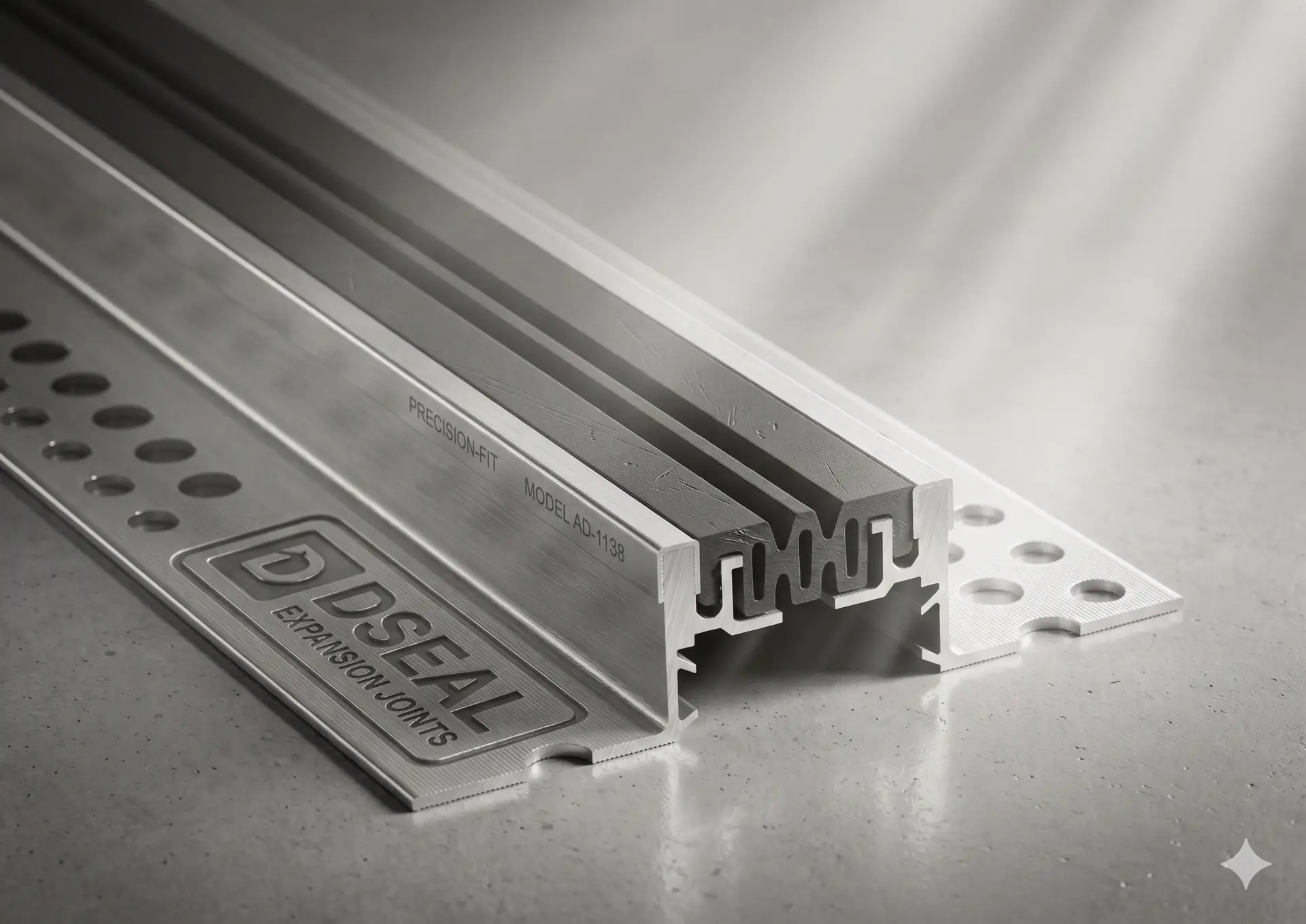
One Profile For Every Joint Condition.
| System | Typical location | Key features |
|---|---|---|
| Floor-to-floor heavy duty (HD) | Malls, industrial floors, car parks | Heavy-duty profile for heavy rolling loads and high footfall |
| Floor-to-floor male/female | Corridors, lobbies, high-frequency pedestrian traffic | Joints 1″–4″ (25–100 mm); recessed or surface mount; serrated slip-resistant surface; integral microseal eliminates noise; ±25% thermal movement |
| Floor-to-wall | Slab-to-wall junctions, residential & commercial buildings | Corner profile closing the joint where floor meets wall |
| Wall-to-wall box type (vertical) | Vertical joints in walls and façades | Galvanized steel, stainless steel or aluminium frames; EPDM or silicone sealing elements; thermal insulation and load-transfer options; seismic design considerations |
| Foot step plate | Heavy-traffic walkways, commercial buildings | Heavy-duty cover plate for concentrated foot traffic |
| Water barrier system | Beneath covers on exposed and wet decks | PE/PP composite membrane forming a secondary waterproof line under the cover |
Floor Systems In Detail.
| Parameter | Specification |
|---|---|
| Joint widths covered | 1″–4″ (25–100 mm) standard; wider gaps engineered to order |
| Thermal movement capability | ±25% of joint width |
| Cover plates | Aluminium (mill finish) or stainless steel; serrated surface for slip resistance |
| Seal | Dual-durometer EPDM insert, snap-fit assembly; integral microseal eliminates noise |
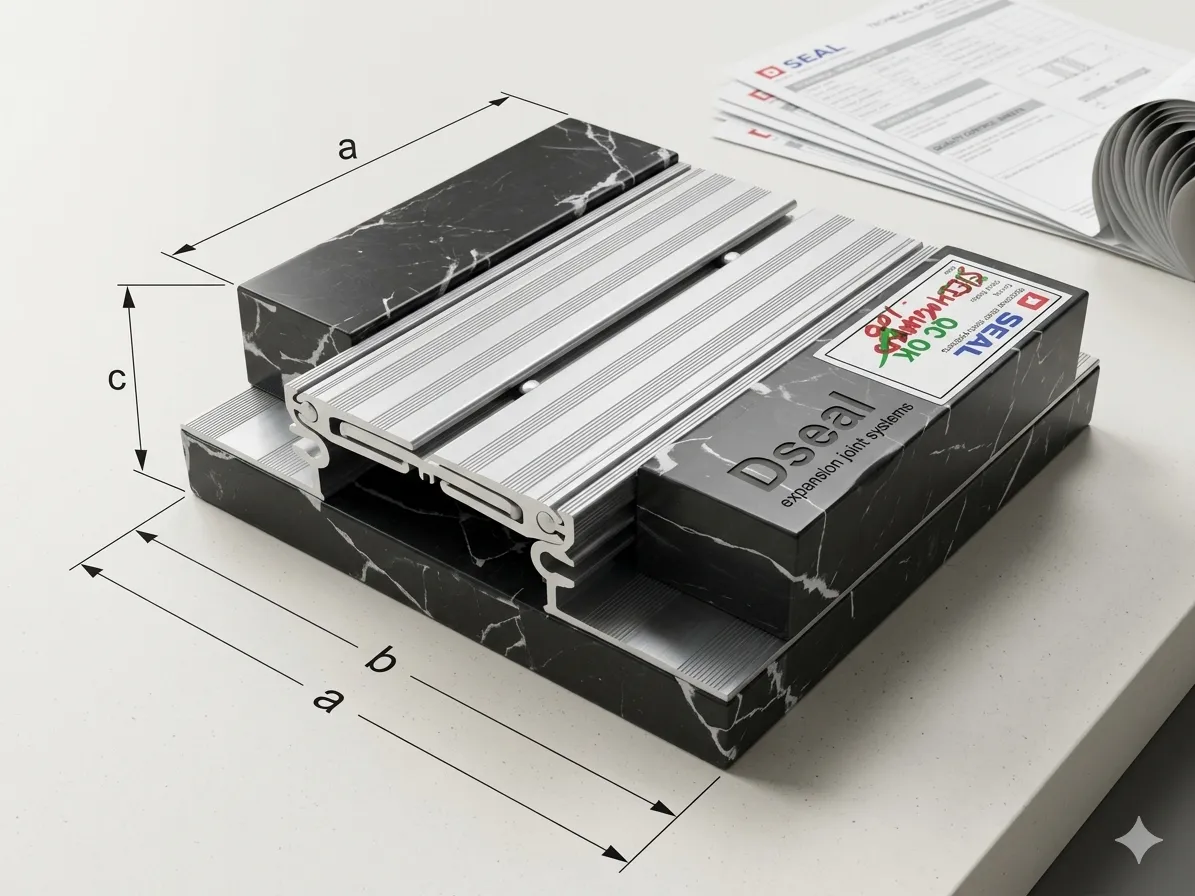
| Mounting | Recessed or surface-mounted; surface frames suit new, existing and renovation work with no expensive block-out |
| Floor finish compatibility | Works with carpet, VCT and tile; frames designed for 1/8″ (3 mm) flooring; smooth transition for wheeled equipment |
| Span support | Centerbar support allows wide spans; fully seismic centerbar system; low-profile option available |
EPDM inserts built for exposure
Dseal sealing elements use EPDM — chemically inert to acids, bases, salts and solvents, with excellent resistance to UV, ozone and ageing, and an operating range of −40°C to +150°C. TPR and TPV insert options extend the same movement performance where the project spec calls for them, and replacement inserts are available ex-factory.
PE/PP composite water barrier
Under exposed covers we install a PE/PP composite waterproofing membrane — polyethylene with high-strength non-woven fabric, UV-shielding and anti-ageing agents. Fracture tensile strength ≥60 N/cm, temperature resilience −40°C to +100°C, non-toxic and odourless, and it can be applied on wet surfaces. Pair it with expansion joint tapes where the joint continues across waterproofed decks.
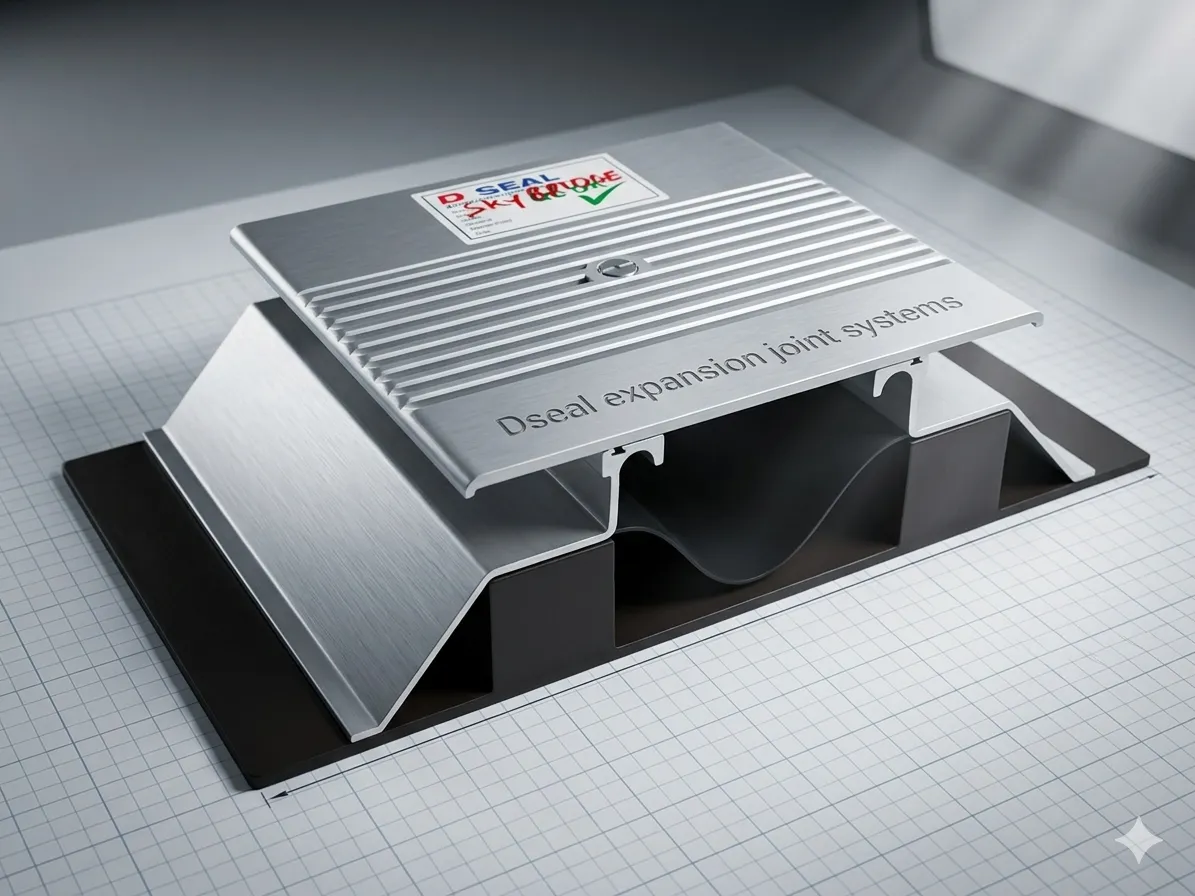
Designed For Movement You Can’t Schedule.
Seismic expansion joints absorb and distribute movement from earthquakes as well as thermal variation — breaking the structure into segments that can move independently instead of cracking. Dseal wall and floor systems carry those seismic considerations into the cover: fully seismic centerbar floor systems, and box-type wall systems with load transfer built in. For existing buildings, surface-mounted frames retrofit without preformed recesses — the reason they are preferred in hospitals, where they also sit flush with vinyl flooring.
Specify In Three Measurements.
To quote a Dseal system we need the joint width, the joint condition (floor-to-floor, floor-to-wall, wall-to-wall), and the traffic it must carry. Add the floor finish thickness for recessed work — the blockout should be a minimum of 5 mm deeper than the joint cover. Our crews install what we manufacture, and we supply the anchors, sealants and water barrier in the same dispatch.
Frequently Asked.
What joint widths do Dseal expansion joint covers handle?
Standard floor systems cover joints from 1″ to 4″ (25–100 mm) with ±25% thermal movement capability. Wider and non-standard gaps are engineered to order — customization is one advantage of buying from the manufacturer.
Aluminium or stainless steel — which cover plate should I choose?
Aluminium (mill finish) suits most commercial interiors and keeps cost down; stainless steel is the choice for harsh environments, heavy industrial duty and wherever corrosion resistance and long service life with minimal maintenance are essential.
Are the systems watertight on exposed decks?
Yes, when specified with the water barrier: a PE/PP composite membrane (fracture tensile strength ≥60 N/cm, −40°C to +100°C) runs beneath the cover as a secondary line of defence, while the EPDM insert seals the surface. On waterproofed decks we tie the system into the deck membrane with expansion joint tapes.
Can joint covers be retrofitted on an existing building?
Yes. Surface-mounted frames are designed for new, existing and renovation conditions and need no expensive block-out. For recess-mounted systems in new work, the blockout must be at least 5 mm deeper than the joint cover.
Do Dseal systems handle seismic movement?
The floor range includes a fully seismic centerbar system, and wall systems are designed with seismic considerations and load transfer so building sections can move independently during an event. Share your structural consultant’s movement figures and we will match the system.